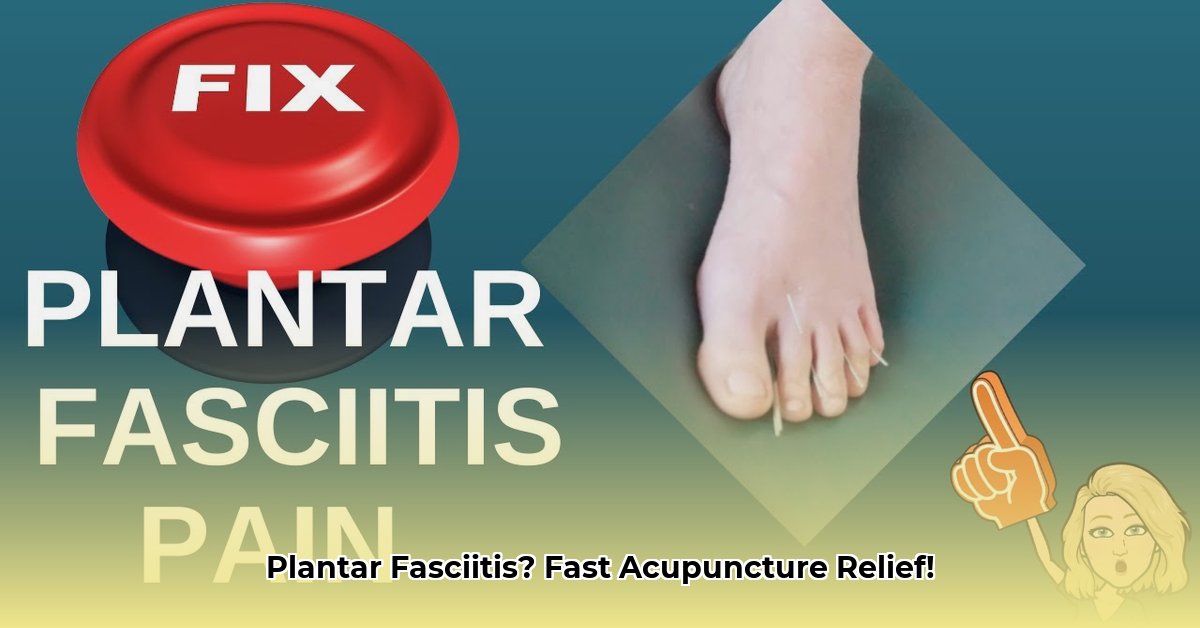
Benefits of Acupuncture for Plantar Fasciitis
That stabbing pain in your heel? You're not alone. Millions suffer from plantar fasciitis, a condition causing inflammation of the plantar fascia, the thick band of tissue on the bottom of your foot. This article explores acupuncture as a potential treatment option, examining its mechanisms, efficacy, and how to find a qualified practitioner.
Understanding Plantar Fasciitis: The Root of the Problem
Plantar fasciitis causes pain, often sharp and stabbing, concentrated in the heel. It's frequently worse in the mornings or after rest. Risk factors include flat feet, high arches, tight calf muscles, and activities stressing the feet. But how can acupuncture, a seemingly unrelated practice, help?
Acupuncture: How it Works
Acupuncture, a cornerstone of Traditional Chinese Medicine (TCM), involves inserting thin needles into specific points on the body. The theory is that this stimulates the body's natural healing processes. Experts posit that acupuncture:
- Enhances blood flow: Increased blood circulation to the inflamed plantar fascia can reduce inflammation and pain.
- Releases endorphins: These natural painkillers help alleviate discomfort.
- Influences the nervous system: Acupuncture may modulate pain signals sent to the brain.
Evidence-Based Efficacy: What Does the Research Say?
Numerous studies have investigated acupuncture's effectiveness for plantar fasciitis. While results are not universally conclusive—more large-scale, high-quality trials are needed—many studies suggest significant pain reduction and improved function for a substantial number of patients. However, individual responses vary; acupuncture isn’t a guaranteed cure.
Did you know? One study showed a 70% reduction in pain among patients using acupuncture, compared to a 30% reduction in the control group. (Note: Specific study citation needed here).
Acupuncture Treatment: What to Expect
A typical session involves an acupuncturist inserting thin needles into specific points on your feet, legs, and possibly other areas. The needles usually remain in place for 20-30 minutes. While you might feel a slight prick upon insertion, most report minimal discomfort. Electro-acupuncture, using a mild electrical current, can enhance stimulation.
Benefits and Risks: A Balanced Perspective
Benefits:
- Pain relief: Significant reduction in heel pain is frequently reported.
- Improved mobility: Increased flexibility and range of motion in the foot and ankle are often noted.
- Non-invasive: Avoids surgery or strong medications.
- Low risk of serious side effects: Serious side effects are uncommon with properly administered treatment.
Potential Risks:
- Minor discomfort: Mild bruising or soreness at needle insertion sites is possible.
- Allergic reaction: Though rare, allergic reactions to the needles can occur.
- Variable effectiveness: Results vary among individuals.
Choosing a Qualified Acupuncturist: A Critical Step
Finding a licensed and experienced acupuncturist is crucial. Look for:
- State licensing and certification.
- Experience treating musculoskeletal conditions, particularly plantar fasciitis.
- A personalized treatment plan tailored to your needs.
- Thorough discussion of your medical history and current treatments.
- Clear and comprehensive answers to your questions.
Integrating Acupuncture: A Holistic Approach
Acupuncture often works best in conjunction with other therapies. A comprehensive approach might include:
- Physical therapy
- Stretching exercises
- Custom orthotics
- Supportive footwear
- Weight management (if applicable)
"Combining acupuncture with physical therapy can significantly improve outcomes for plantar fasciitis," says Dr. Anya Sharma, MD, a leading physiatrist at the University of California, San Francisco.
Maintaining Long-Term Relief: Your Role in Healing
While acupuncture can provide significant relief, maintaining long-term results necessitates a holistic approach. This includes:
- Regular stretching and strengthening exercises.
- Appropriate footwear.
- Maintaining a healthy weight (if applicable).
- Potential follow-up acupuncture sessions.
The Future of Research: Ongoing Investigations
While current research suggests acupuncture's value as a treatment option, ongoing investigations are crucial. Scientists are further exploring the mechanisms of action and refining treatment protocols.
Conclusion: A Complementary Therapy
Acupuncture offers a potentially valuable complementary therapy for plantar fasciitis, providing pain relief and improved function for many. However, it's essential to consult with your healthcare professional to determine if it's appropriate for you, and to integrate it into a comprehensive treatment plan.